
Bayes’ Theorem and the Resurrection
“When our last hour comes, we will have the great and ineffable joy of seeing the One whom we could only glimpse in all our work.”
— Carl Friedrich Gauss (1777–1855)
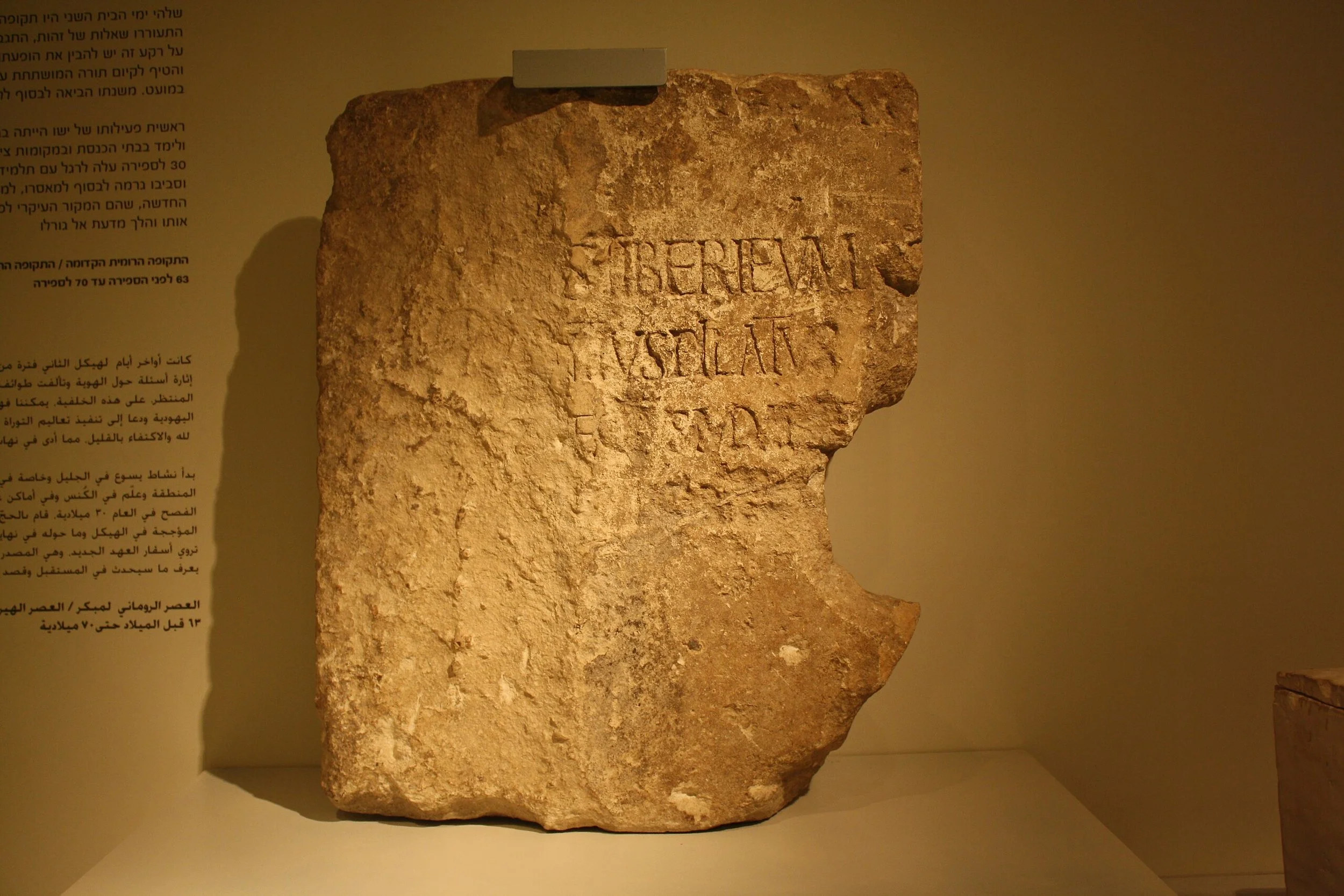
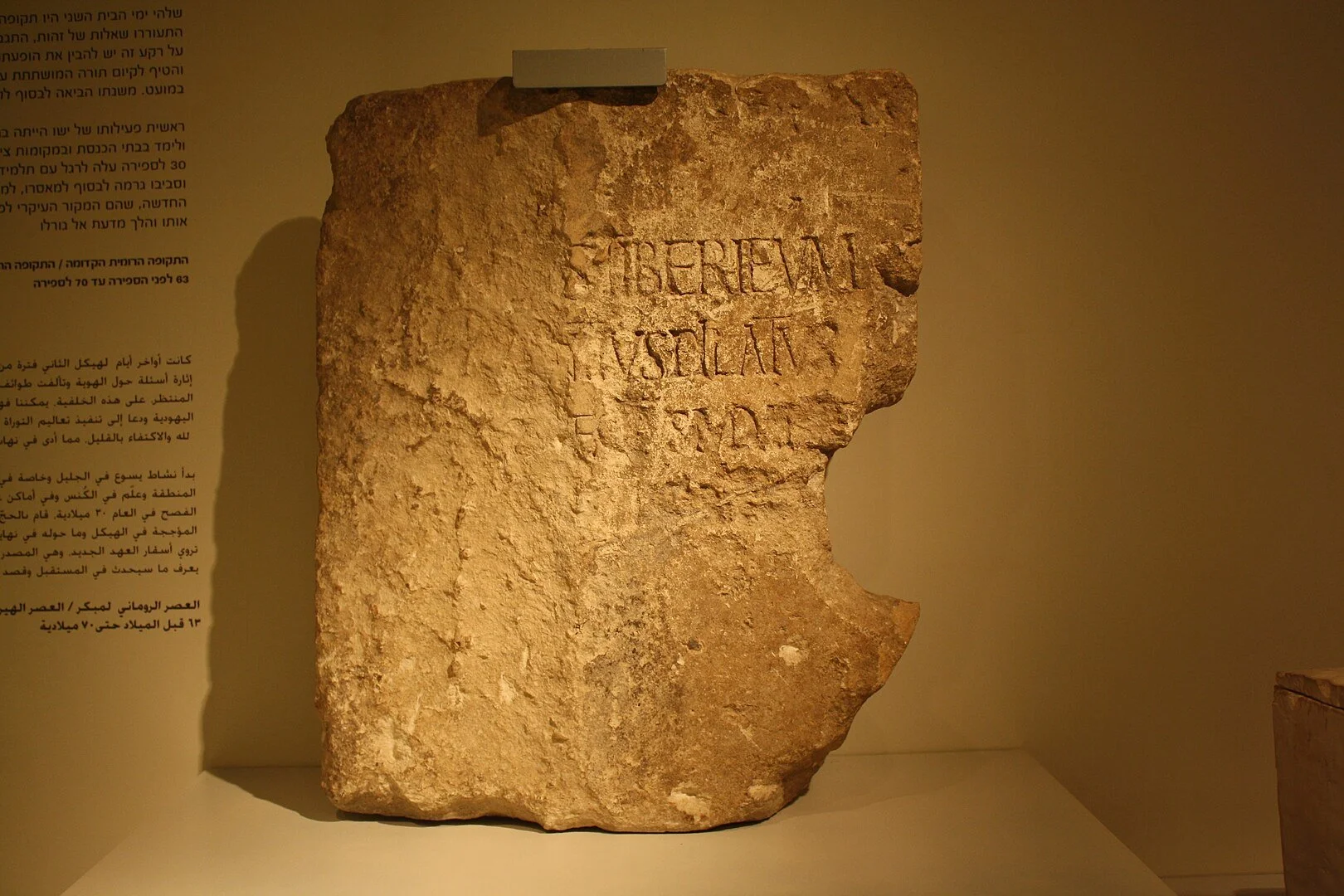
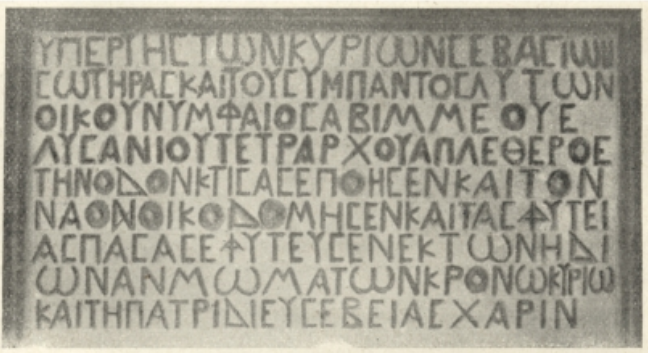
Pontius Pilate Inscription
By Chris and the Editorial Staff
Acknowledgements: I reused many ideas from the excellent writeup Why I am a Christian by Yale Finance Professor James J. Choi, along with various other contemporary sources.
Bayes Factor
Unlike other world religions, Christianity makes a falsifiable historical claim: that Jesus of Nazareth was executed and then rose from the dead.
“If Christ has not been raised, then our preaching is in vain and your faith is in vain.”
— Paul the Apostle (1 Corinthians 15:14)
Skeptics often cite David Hume’s maxim to dismiss the resurrection a priori:
A miracle is a violation of the laws of nature; and as a firm and unalterable experience has established these laws, the proof against a miracle, from the very nature of the fact, is as entire as any argument from experience as can be imagined.
In probability terms, Hume argues that the prior probability — P(R) — of a resurrection is so vanishingly small that no amount of evidence can overcome it.
However, Bayes’ Theorem tells us that Hume’s reasoning is incomplete:
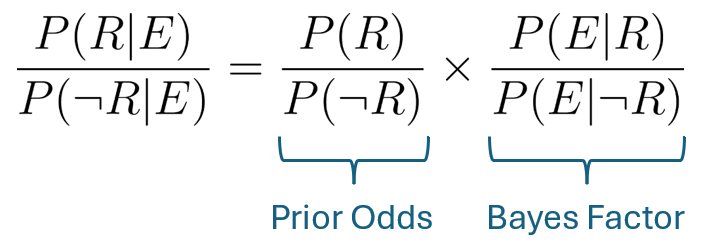
Note that the vertical bar | simply means “given that,” e.g., P(E|R) is the probability of the evidence given that the resurrection really happened.
So let’s break down the equation above:
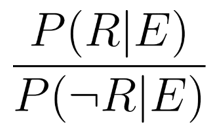
The left side. This is what we’re looking for. It represents the probability that the resurrection is true (R) after we have considered all the historical evidence (E), compared to the probability that it is false (¬R).
This quantity is the product of the following two terms:
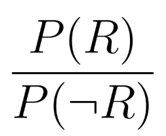
The first term: Prior odds. This measures probability before looking at any evidence. Almost everyone would agree that the intrinsic probability of a dead man rising is near zero.
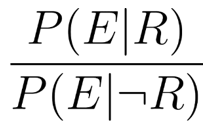
The second term: Bayes factor. This is where the historical data changes the calculation. We must ask which hypothesis better explains the specific facts we have found (the evidence E):
The numerator P(E|R): If Jesus actually rose from the dead (R), how likely is it that his tomb would be empty and his followers would report seeing him alive?
The denominator P(E|¬ R): If Jesus stayed dead (¬ R), how likely is the historical evidence (E) after Jesus’ death? For example:
How likely is it that the disciples would willingly die for a lie? (See Fact 3 in Minimal Facts).
How likely is it that skeptics like Paul would convert? (See Fact 5).
How likely is it that the tomb was empty? (See Fact 6).
Caveat: if a skeptic’s prior probability P(R) is zero, i.e., “miracles are impossible,” no amount of evidence can work. But is there any metaphysical justification for this position? On the contrary, the 13th century philosopher Thomas Aquinas published metaphysical arguments for the existence of God, the origin of everything that exists and the instigator of the first miracle: creating the universe out of nothing.
Mathematically, a massive Bayes Factor can overcome a tiny prior probability. So the question is not “How rare is a resurrection?” but “Can any other hypothesis explain the historical facts?”
The Reliability of the New Testament
Archaeological Confirmation
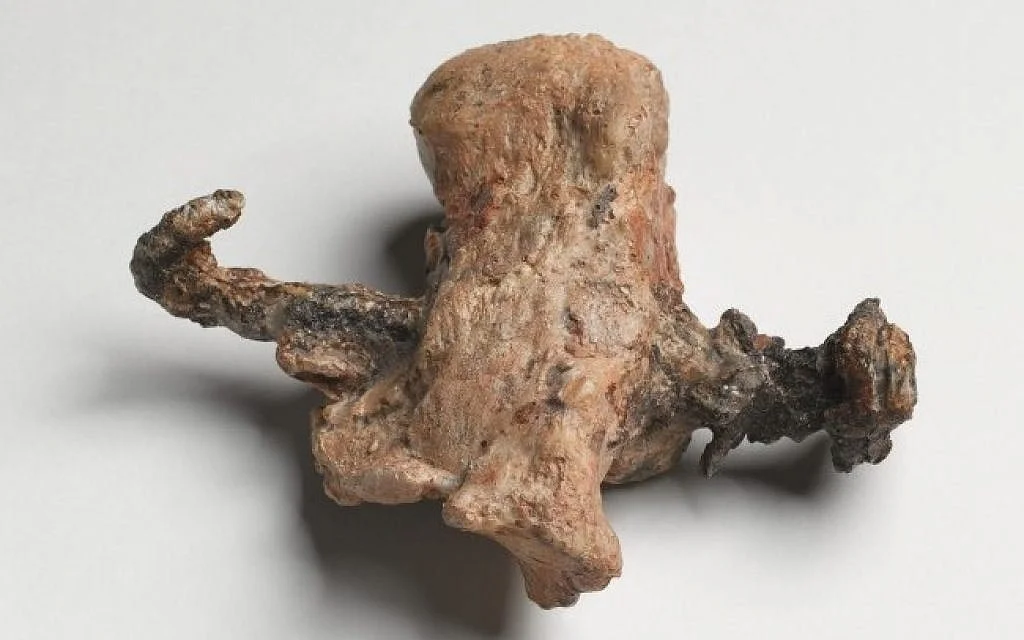
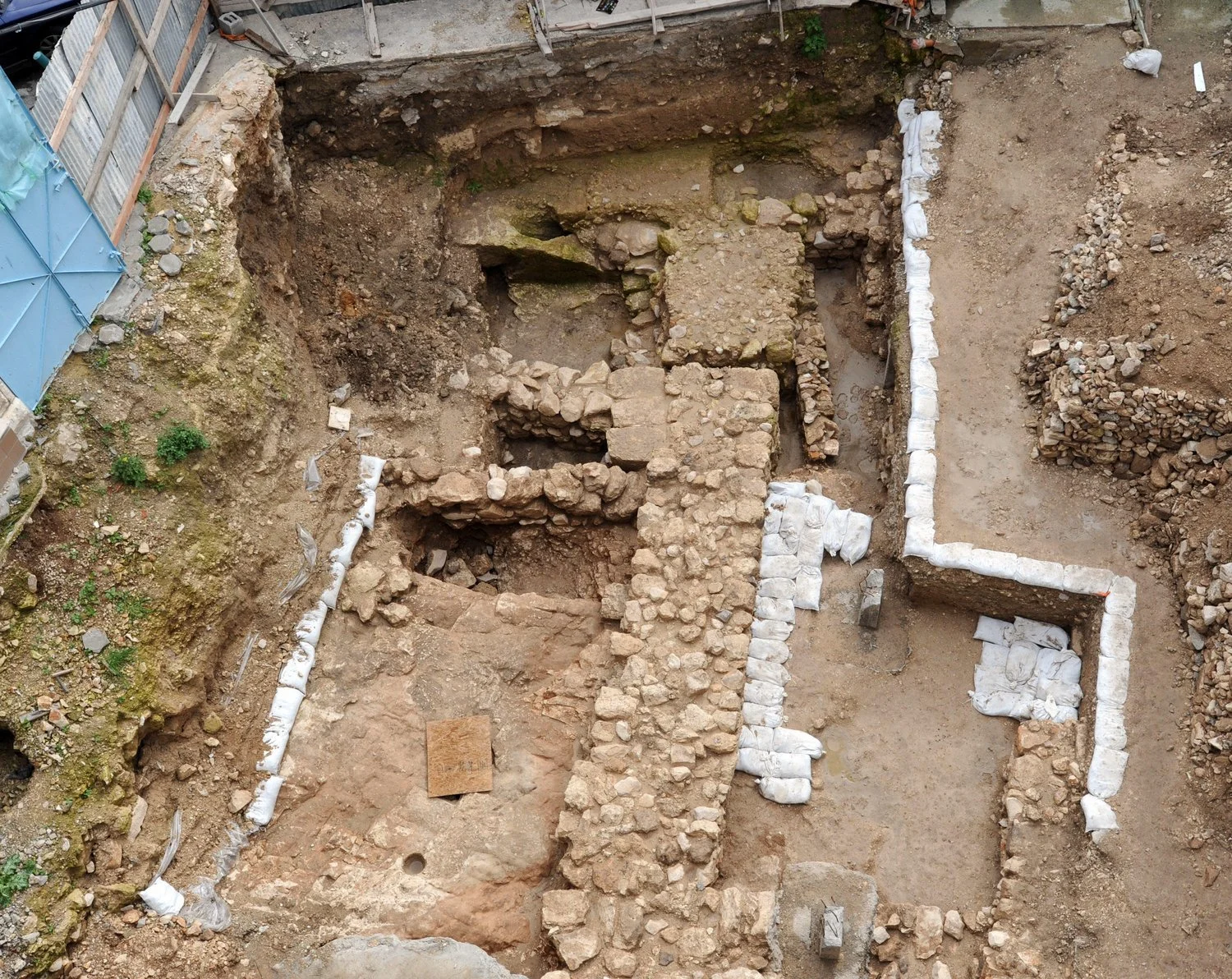
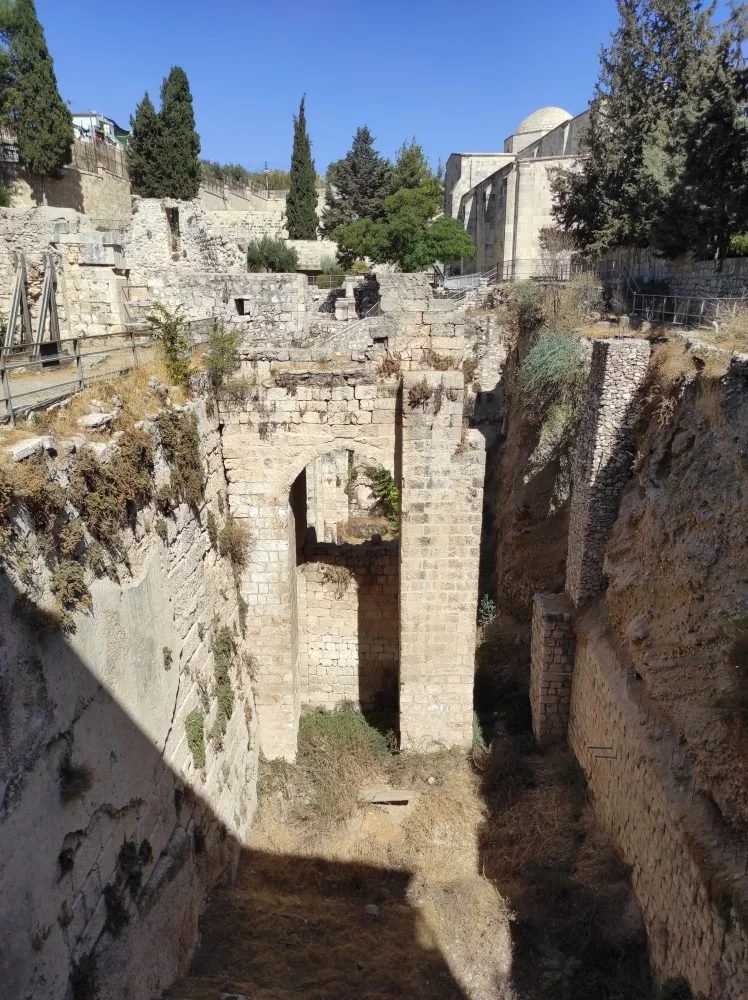
For centuries, scholars and skeptics doubted the historical accuracy of biblical details, including the existence of specific people, places, and titles. But the archaeological discoveries speak for themselves: [use the arrows below to scroll through the slides]
The Earliness of the Accounts
The Gospels (Matthew, Mark, Luke, and John) were written 30–60 years after the crucifixion, during the lifetimes of the eyewitnesses. In other words, they were written “in such temporal and geographical proximity to the events they record” (Craig p. 341), making it trivial for skeptics to expose any fabrications.
The Apostle Paul wrote his first letter to the Corinthians around AD 55, about 25 years after the crucifixion. In it, he records an even earlier Christian creed (a statement of belief) regarding the death, burial, and resurrection appearances:
“For I delivered to you as of first importance what I also received, that Christ died for our sins in accordance with the scriptures, that he was buried, that he was raised on the third day in accordance with the scriptures, and that he appeared to Cephas [Peter], then to the Twelve.”— 1 Corinthians 15:3-5
This creed is widely dated by scholars (including skeptics such as Bart Ehrman and Gerd Lüdemann) to within 3–5 years of the crucifixion, with some dating it to mere months after the event.
Manuscript Integrity
A common critique suggests the New Testament texts we have today were substantially altered or invented centuries after the events. However, the manuscript evidence strongly contradicts this.
Bodmer Papyri, discovered in Dishna, Egypt in 1952
A popular myth suggested the New Testament was heavily edited or invented during the time of Emperor Constantine (4th century). But the Bodmer Papyri (dating to c. AD 200) contains early copies of Luke and John that closely match 4th-century codices such as Codex Vaticanus.John Rylands Fragment (P52), discovered in Egypt in 1920
This business-card-sized fragment contains verses from John 18. It is dated to c. AD 125, only several decades after John’s Gospel was composed. It was found in Egypt, far from the Gospel’s origin in Asia Minor.
The New Testament is the best-attested work of antiquity by a wide margin. There are thousands of surviving ancient manuscripts. The time span between the books’ original composition dates and their oldest surviving fragments/copies is remarkably short.
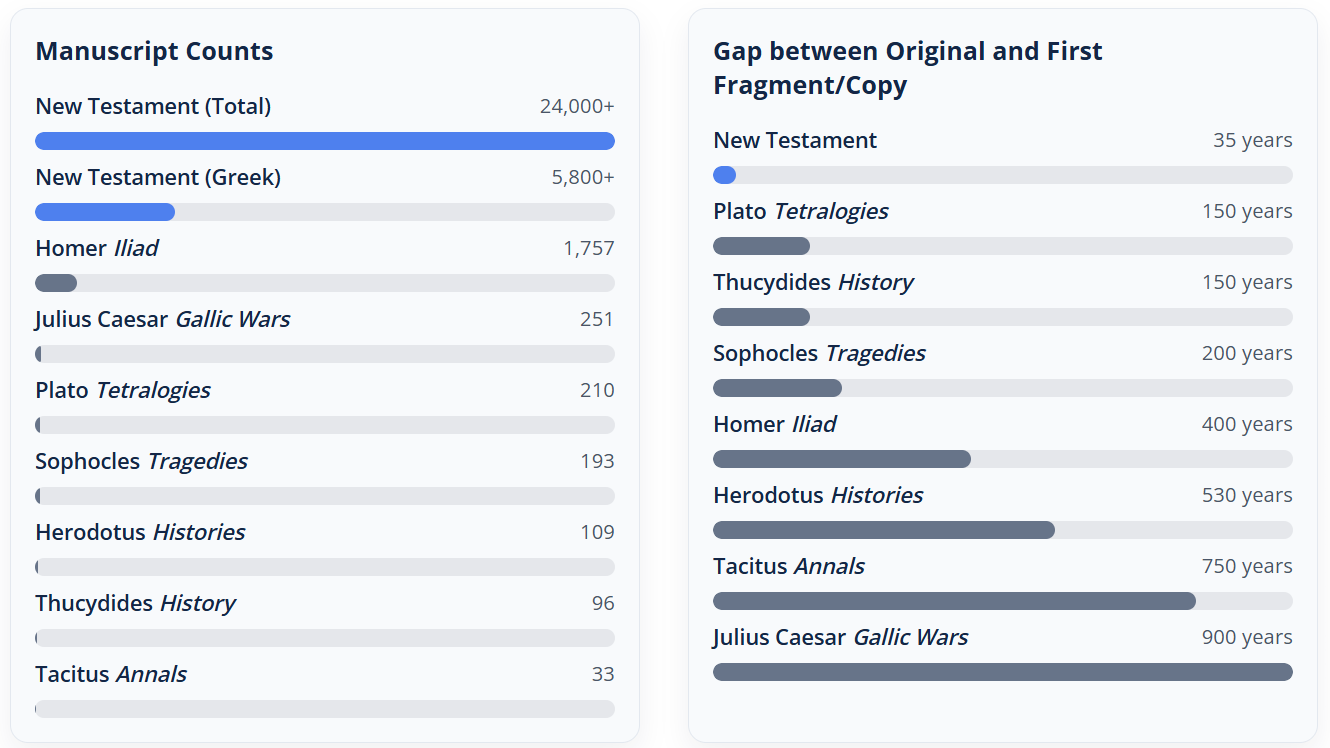
The vast number of manuscripts allows scholars to reconstruct the original text with >99% certainty. There are ~400,000 textual variants across the millions of pages of manuscripts:
>70% are spelling differences (e.g., “John” vs. “Jhon”).
>20% are non-translatable variations (Greek word order changes that do not alter meaning).
<1% are “meaningful and viable” variants (e.g. the addition of John 7:53-8:11, the story of the woman caught in adultery).
But even these “meaningful and viable” variations do not affect any core historical claim or theological doctrine. Bart Ehrman, a leading atheist biblical scholar, admits:
Essential Christian beliefs are not affected by textual variants in the manuscript tradition of the New Testament. (Misquoting Jesus, p. 252)
The Basics: Death and Crucifixion
Before examining evidence for the resurrection, let’s start with the basic facts: the historical existence of Jesus and his crucifixion. The consensus among historians, both religious and secular, is clear: Jesus existed and was executed by crucifixion (likely around AD 30 or 33).
Non-Christian Sources
Flavius Josephus, a Roman-Jewish historian refers to “Jesus, who was called Christ” (Antiquities of the Jews, AD 93-94).
Tacitus, a non-Christian Roman historian and senator:
“Christus . . . suffered the extreme penalty during the reign of Tiberius at the hands of one of our procurators, Pontius Pilatus” (Annals, AD 116).
Pliny the Younger, a Roman governor of Bithynia and Pontus:
“... they were accustomed to meet on a fixed day before dawn and sing responsively a hymn to Christ as to a god” (Epistulae, AD 112).
Lucian of Samosata, an anti-Christian Greek satirist:
“The Christians, you know, worship a man to this day — the distinguished personage who introduced their novel rites, and was crucified on that account” (The Passing of Peregrinus, AD 170).
Suetonius, a Roman historian:
“Since the Jews constantly made disturbances at the instigation of Chrestus, he expelled them from Rome” (Lives of the Twelve Caesars, AD 121).
The quotes here provide non-Christian evidence affirming that (1) Jesus existed, (2) he suffered death by crucifixion for his novel ideas, (3) he is the one referred to as Christ, Christus, and probably Chrestus, and (4) Jesus Christ had a rather large group of followers who, after a century and a half, were considered a threat to the Roman pantheon and government.
Atheist historian Gerd Lüdemann concluded:
Jesus’ death as a consequence of crucifixion is indisputable. (Resurrection of Christ, p. 50)
Minimal Facts: “Liars Make Poor Martyrs”
The Minimal Facts approach, championed by New Testament scholar and theologian Gary Habermas, focuses on data that are strongly attested and accepted by the vast majority of scholars, including skeptics. The strength of the resurrection hypothesis lies in its ability to explain these facts better than alternative theories.
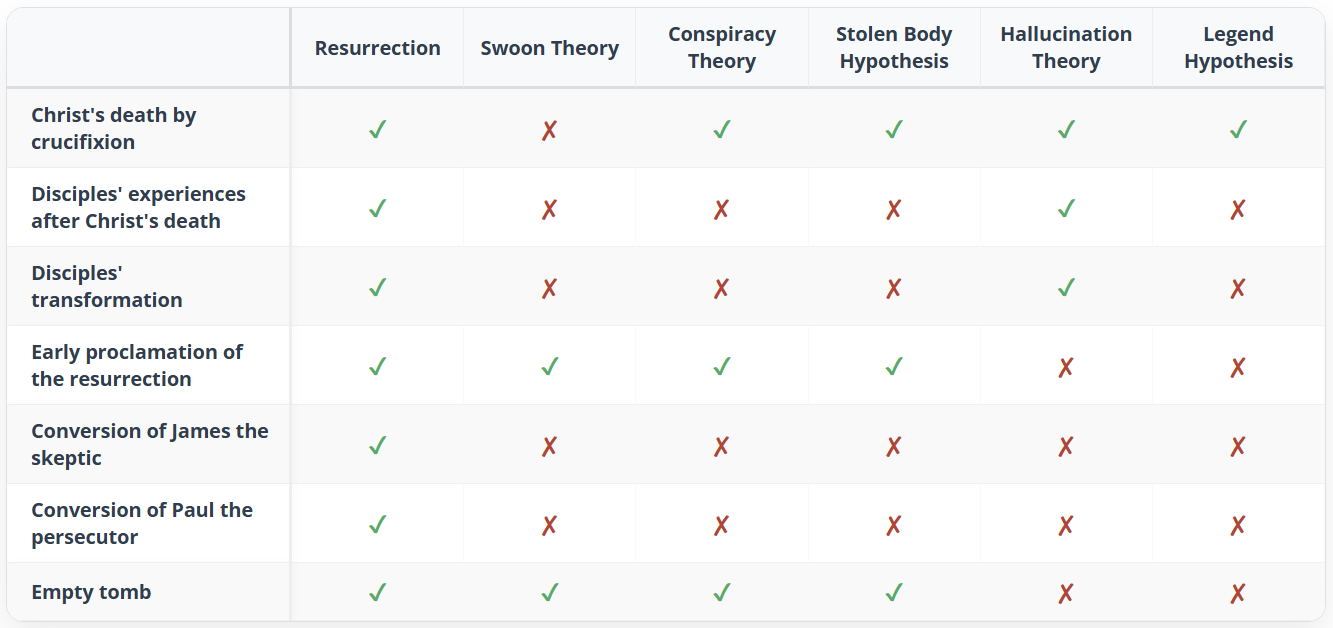
Fact 1: The Death of Jesus
As mentioned before, the historicity of Jesus’ death by crucifixion is virtually undisputed. The swoon hypothesis, which suggests Jesus merely lost consciousness and later revived, is contradicted by medical analysis.
“Modern medical interpretation of the historical evidence indicates that Jesus was dead when taken down from the cross.” — Edwards et al., JAMA 1986
Retief and Cilliers (2003) suggest that military protocol at the time would have ensured Jesus’ death on the cross:
The attending Roman guards could only leave the site after the victim had died and were known to precipitate death by means of deliberate fracturing of the tibia and/or fibula, spear stab wounds into the heart, sharp blows to the front of the chest, or a smoking fire built at the foot of the cross to asphyxiate the victim.
The comments from Retief and Cilliers corroborate John’s account of the crucifixion. In his Gospel (19:32-35), John tells us what he witnessed:
So the soldiers came and broke the legs of the first, and of the other who had been crucified with him; but when they came to Jesus and saw that he was already dead, they did not break his legs. But one of the soldiers pierced his side with a spear, and at once there came out blood and water. He who saw it has borne witness — his testimony is true, and he knows that he tells the truth — that you also may believe.
Fact 2: Post-Mortem Appearances
The disciples did not merely claim the tomb was empty; they claimed they saw Jesus alive again and had tangible encounters. They touched Jesus, and he ate food with them.
The appearances occurred to both individuals and groups in various settings:
The two Marys (Matthew 28:9)
The eleven apostles together (Luke 24:36-51, John 20:19-30)
Paul also reported that the risen Christ appeared to more than 500 people at the same time, “most of whom are still alive” (1 Corinthians 15:6), effectively inviting skeptics to speak with these living witnesses.
The hallucination hypothesis suggests these were merely visions. However, there is no clinical literature documenting a detailed, conversational hallucination shared simultaneously by a group.
“I have surveyed the professional literature (peer-reviewed journal articles and books) written by psychologists, psychiatrists, and other relevant healthcare professionals during the past two decades and have yet to find a single documented case of a group hallucination, that is, an event for which more than one person purportedly shared in a visual or other sensory perception where there was clearly no external referent.
Hallucinations are individual occurrences. By their very nature, only one person can see a given hallucination at a time. They certainly aren’t something which can be seen by a group of people. Neither is it possible that one person could somehow induce a hallucination in somebody else. Since a hallucination exists only in this subjective, personal sense, it is obvious that others cannot witness it.” — Clinical psychologist Gary A. Sibcy
Fact 3: The Transformation of the Disciples
The most compelling circumstantial evidence is the radical transformation of Jesus’ followers. At his arrest, they scattered in fear. Peter, the leader, publicly disowned Jesus three times (Matthew 26:69-75). Shortly after the crucifixion, this same group began boldly proclaiming the resurrection despite intense persecution, torture, and martyrdom.
The “conspiracy theory” posits that the disciples and other followers colluded to invent and perpetuate the myth of Jesus’ resurrection. However, it is psychologically implausible that they would maintain the deception.
No incentive to lie: What did the apostles have to gain? Persecution and death.
Incentive to recant: The usefulness of the lie would surely have disappeared when facing execution. Recanting may have saved their lives, yet none of the apostles recanted their story. This rules out the “stolen body hypothesis.” If the disciples had stolen the body, they would have known the resurrection was a lie. While people often die for false beliefs they genuinely think are true, they do not willingly face torture and execution for a hoax they concocted themselves.
Criterion of embarrassment: The Bible is not shy about recording the apostles’ failures, most notably Judas betraying Jesus and Peter denying him. If the early church was engineering a conspiracy, these embarrassing details would have been omitted.
“Here were the 10 most powerful men in the United States [in the Watergate scandal]. With all that power, and we couldn’t contain a lie for two weeks… Take it from one who was involved in conspiracy... There is no way the 11 apostles... could ever have gone around for 40 years proclaiming Jesus’ resurrection unless it were true.” — Chuck Colson, former White House special counsel during Watergate
Fact 4: Early Proclamation of the Resurrection
The proclamation of Jesus’ resurrection began immediately after his death, rather than developing as a legend over decades or centuries. The teaching that “Jesus is risen” can be traced back to the very beginning of the Christian movement in Jerusalem.
This consensus relies heavily on creedal traditions preserved in the New Testament that predate the books themselves. The most significant is the creed found in 1 Corinthians 15, mentioned earlier, widely dated by scholars to within 3-5 years of the crucifixion.
This early dating dismantles the legend hypothesis. Legends typically require a gap of several generations (roughly 40–80 years) to develop and displace historical memory. A.N. Sherwin-White, a historian of Rome, argued that “even two generations are too short a span to allow the mythical tendency to prevail over the hard historical core of the oral tradition.” Since the belief in the resurrection was fully formed and preached immediately by the eyewitnesses, there was no gap for a legend to grow.
Fact 5: The Conversion of Skeptics and Enemies
Skeptics and enemies experienced appearances that led to their radical conversions — an unlikely outcome of hallucination (which usually stems from expectation or grief) or conspiracy.
James was skeptical of Jesus during his ministry (John 7:5). Yet, he became a key leader of the Jerusalem church after reportedly seeing the resurrected Jesus (1 Corinthians 15:7). He was later martyred for this faith.
Paul (Saul of Tarsus): Paul was one of Christianity’s most committed enemies, a leader in persecuting Christians whom he viewed as dangerous blasphemers. He had absolutely nothing to gain from converting. Yet, Paul encountered the resurrected Jesus (Acts 9:1-19). He became an immediate convert, the greatest evangelist for the Christian faith, and eventually died for that faith.

The Aedicule at the Church of the Holy Sepulchre in Jerusalem, traditionally marked as the site of Jesus Christ’s empty tomb
Fact 6: The Empty Tomb
The Empty Tomb is accepted by ~75% of scholars, while the facts above have near-universal consensus (>90%).
All four Gospels report that Jesus was buried in a known tomb (that of Joseph of Arimathea) and that female followers discovered the tomb empty on the third day. Several factors support the historicity of the empty tomb:
The Jerusalem factor: The disciples began proclaiming the resurrection in Jerusalem, the very city where Jesus was buried. Christianity’s early enemies could have put an early end to the movement by producing the corpse of Jesus, but they didn’t.
Enemy attestation: Matthew 28:11-15 records that the Jewish leaders claimed the disciples stole the body. Justin Martyr in the 2nd century records that this “theft lie” was still being circulated by opponents of Christianity. By claiming the body was stolen, the enemies of Christianity were implicitly admitting the tomb was empty.
The testimony of women: In first-century culture, the testimony of women was often undervalued and not admissible in Jewish courts. If the disciples were fabricating a story, it is unlikely they would have made women the primary witnesses to the empty tomb. Celsus, a 2nd-century critic, mocked Christians for relying on the testimony of a “hysterical female” (Mary Magdalene).
Burial details: The Gospels provide details confirming the location. He was buried in a tomb that had never been used before (Matthew 27:60, John 19:41), and the first witnesses watched Jesus being placed in the tomb (Matthew 27:61).
“Even if the disciples had preached Jesus’ resurrection despite his occupied tomb, scarcely anybody else would have believed them. One of the most remarkable facts about the early Christian belief in Jesus’ resurrection was that it flourished in the very city where Jesus had been publicly crucified. So long as the people of Jerusalem thought that Jesus’ body was in the tomb, few would have been prepared to believe such nonsense as that Jesus had been raised from the dead […]. If even no longer identifiable remains lay in the tomb where Jesus had been buried, the burden of proof would have lain upon the shoulders of those who said that these were not Jesus’ remains. But no such dispute over the identification of Jesus’ corpse ever seems to have taken place.” — American analytic philosopher William Lane Craig
The Uniqueness of the Resurrection Claim
“The evidence for the resurrection is better than for claimed miracles in any other religion. It’s outstandingly different in quality and quantity.” — Antony Flew, Deist philosopher of religion
Comparison with Other Messiahs
It is exceptionally rare for followers of a religious leader to claim that their executed leader rose bodily from the dead. False claims of this sort are easily debunked.
Wikipedia lists 25+ people who have claimed to be the Jewish messiah over the past 2,000 years.
Other messianic claimants (e.g. Judas the Galilean, Theudas, “the Egyptian,” Simon bar Kokhba) all followed the same pattern:
The leader dies. No followers claim the leader rose from the dead.
The movement collapses or a replacement messiah (often a relative) is chosen.
What about Jesus Christ?
Jesus is crucified (the ultimate sign of messianic failure). “Cursed be every one who hangs on a tree” (Galatians 3:13). In the Roman context, crucifixion was the “servile punishment,” i.e., the ultimate shame.
The movement does not die.
They do not pick James (Jesus’ relative) as the new Messiah.
Instead, they insist the executed man himself is still the Messiah because God raised him.
As pointed out by Professor James J. Choi, “the fact that the early Christians claimed this and their claim didn’t quickly fall apart suggests that something extraordinary happened.”
Mutation of Jewish Belief and Practice
In Second Temple Judaism, resurrection (anastasis) meant a bodily resurrection of all God’s people at the end of time, not one person in the middle of history. But the disciples began proclaiming that one man had already been raised, ahead of everyone else. Scholar N.T. Wright pointed out that something must have happened to force this “mutation,” i.e., a radical theological shift.
This theological mutation was matched by an equally radical shift in practice. For centuries, observing the Sabbath (Saturday) was a defining mark of Jewish identity, reinforced by strict laws and social customs. And yet early Jewish Christians (who were generally zealous for the Law) began worshipping on the first day of the week (Sunday). Wright contends that such a serious social and religious transgression is inexplicable unless a major transformative event occurred on a Sunday.
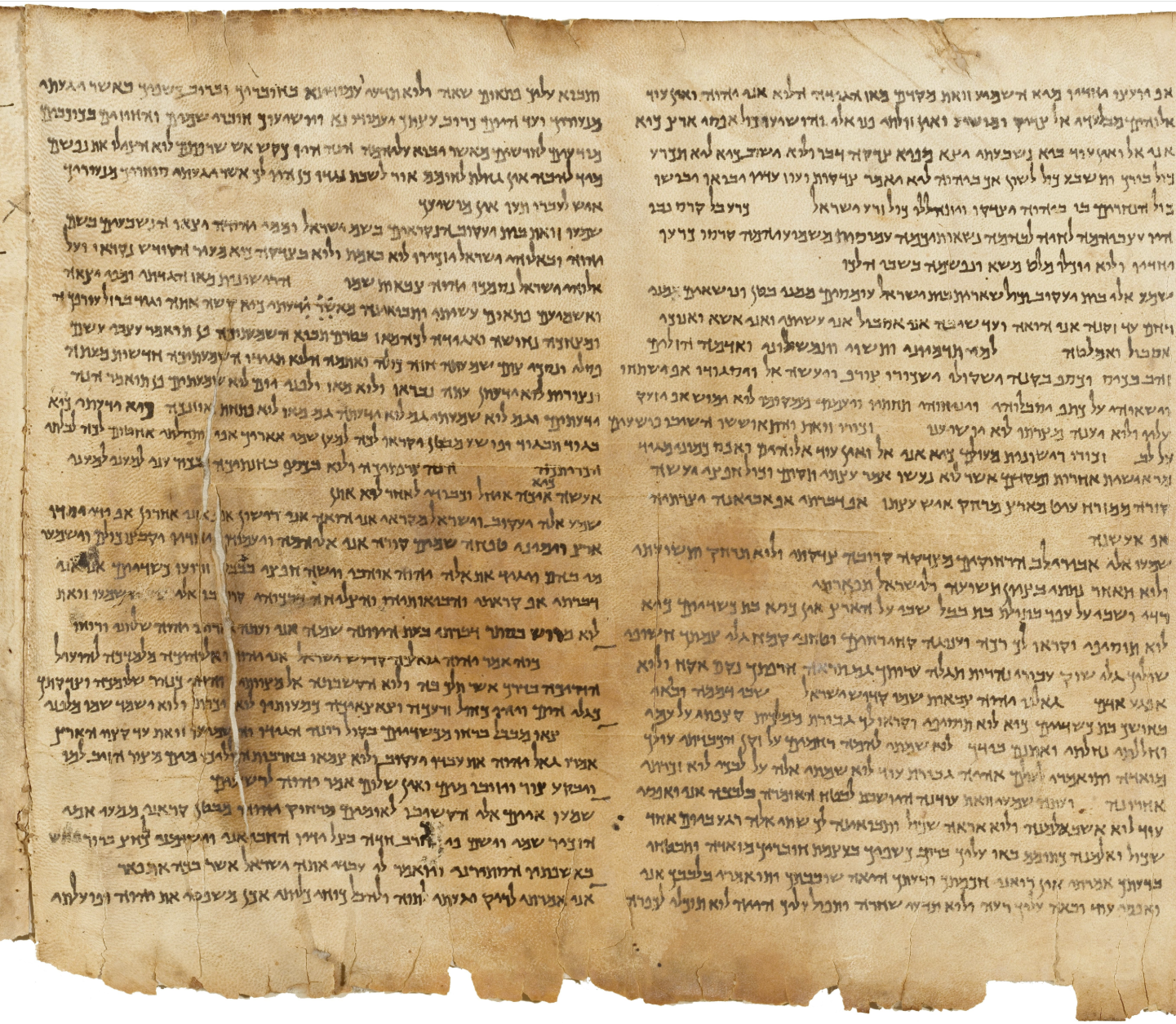
Great Isaiah Scroll
Fulfillment of the Old Testament
The crucifixion and Resurrection events were not unforeseen.
Isaiah 53
The Great Isaiah Scroll was found among the Dead Sea Scrolls and radiocarbon dated to c. 335–125 BC. It contains Isaiah 53, which predicts a servant who:
Is “pierced for our transgressions.” Note: The Hebrew word used in the scroll (mecholal) means “pierced” or “bored through.”
Is “like a lamb that is led to the slaughter” (silent before accusers).
Is assigned a “grave with the wicked” but is “with a rich man in his tomb” (buried in the tomb of Joseph of Arimathea).
Yet, after suffering, “shall see light.”
Psalm 22
Psalm 22 was written a millennium before the Romans adopted crucifixion. It describes an execution style unknown to the author (King David, who would have known stoning):
“They have pierced my hands and feet — I can count all my bones” (v. 16-17)
“I am poured out like water, and all my bones are out of joint” (v. 14). Note that the sensation of bones being “out of joint” is consistent with the orthopedic consequences of death by suspension.
“They divide my garments among them, and for my clothing they cast lots” (v. 18).The Roman soldiers gambled for Jesus’ tunic. Under Roman law, the clothes and minor possessions of an executed criminal were the perks of the execution squad.
Skeptics may ask: “Was this text written after the crucifixion to match the event?” History says no. The Old Testament was translated into Greek ~200 years before Jesus’ birth. These pre-Christian Jewish translators rendered verse 16 as “they pierced/dug” (ōryxan).
In Defense of Hume
Long after I became a Christian, I realized something surprising: much of the compelling historical evidence for Christianity, including the resurrection, has surfaced only in the past few centuries.
David Hume, the 18th-century philosopher I mentioned in the introduction, argued that the prior probability of a miracle is so vanishingly small that it is always more likely that a witness is lying or mistaken. Setting aside the (un-)soundness of this argument, I would offer a defense of Hume’s skepticism: he was doing the math with very incomplete data.
In Hume’s time, the historical evidence (E) was limited and static, so it was easy for him to let the low prior probability (P(R)) dominate the equation. He wrote two centuries before the discovery of the Dead Sea Scrolls proved that the prophecies of Isaiah predated Jesus by over a hundred years, before the Pilate Stone and the Yehohanan Ossuary validated key details of Roman governance and crucifixion mentioned in the Gospels, and before modern textual criticism dated the 1 Corinthians 15 creed to within several years of the event (which weakened the legend hypothesis).
But the modern discoveries in archaeology and historical scholarship force us to update the Bayes Factor. We must ask which hypothesis better explains the survival of this narrative after two centuries of intense scientific scrutiny:
¬R (Fabrication): Predicts that over 2,000 years, cracks would appear in the narrative, artifacts would contradict the text, or a naturalistic explanation (such as theft of the body) would eventually fit the facts.
R (Resurrection): Predicts that the accounts will hold firm against the shovel and the microscope.
If the resurrection were a fabrication, the relentless advance of science, archaeology, and history should have debunked it by now.
Has it?